Tailoring teaching design to help more students succeed
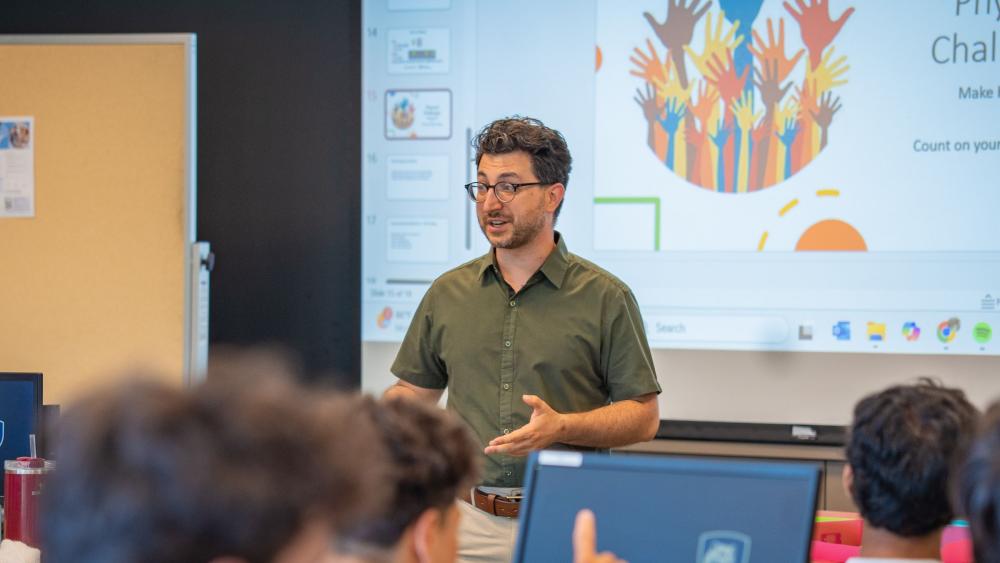
Roderick Lee, associate professor of information systems and affiliate associate professor of information sciences and technology at Penn State Harrisburg, was a co-author of the course.
“From an institutional perspective, this course aligns well with the University’s strategic priorities to enhance student success and foster a culture of inclusive excellence,” he said. “It aims to address some of the institutional barriers to learning and help close equity gaps in students’ classroom experiences and educational outcomes.”
Matt Dingo, assistant director of online faculty development at World Campus, served as an instructional designer for the course. According to Dingo, the course came together in a non-traditional way: using artificial intelligence (AI) and the authors’ already published materials on INCLUSIVE ADDIE.
According to Dingo, this innovative approach brought together subject matter expertise, instructional design and artificial intelligence to co-author this faculty development course. The process aligned with emerging best practices for responsible AI-assisted course authoring and enabled the team to create high-quality materials on this timely topic based on Gamrat’s framework.
“This special collaboration worked because we had permission from authors who happened to have technical expertise,” Dingo said.
It is an excellent example of taking a multidisciplinary approach to learning design, involving input from the College of IST, World Campus and Harrisburg campus, according to Lynette Yarger, IST professor and associate dean for equity and inclusion at Schreyer Honors College, who was another core author of the course and lead researcher on the INCLUSIVE ADDIE project.
“That’s four unique areas of Penn State represented in a single course design,” Dingo said. “And it’s a course that is available to instructors University-wide, including the Commonwealth Campuses, as they strive to improve the way they present content to their students.”
Gamrat said he hopes this offering will help instructors customize and personalize the courses they teach with a multimodal focus not only on what they design but also how they design it.
“We want people to be intentional in their teaching and maybe look through a different lens when thinking about structuring policies, executing assignments and asking for deliverables,” he said. “These baked-in structures will help instructors feel prepared to welcome students and get them excited about learning.”
The quality of the faculty-student interaction and the classroom experience have the greatest institutional impact on student learning outcomes, according to Lee.
“INCLUSIVE ADDIE is not a substitute for universal learning design but rather a complement designed to improve student success,” he said. “Faculty shape the curriculum and pedagogy and have considerable influence over whether students feel they belong in the classroom. We hope this course empowers faculty to leverage that influence to improve student success.”
For Dingo, this course is not simply another offering in the faculty development portfolio.
“What strikes me is how this course dovetails with what we’re trying to teach across our faculty development curriculum,” he said. “I feel confident that people taking this course are going to come out with better ideas for engaging students with culturally responsive teaching practices.”
Instructors and designers can read about and register for OL 2800 on the World Campus Online Faculty Development course catalog.
link