Exploring the role of social media in mathematics learning: effects on self-efficacy, interest, and self-regulation | BMC Psychology

Our framework is grounded in insights from the control-value theory [38, 39], which provides a robust foundation for understanding the dynamic interplay between students’ learning environments, motivation, beliefs, emotions, and behaviors. This theory emphasizes that students’ appraisals of control and value are central to shaping their achievement emotions and subsequent learning outcomes. On the one hand, control appraisals refer to students’ perceptions of their ability to influence their learning outcomes, such as their confidence in their skills and capacity to succeed (e.g., self-efficacy). These appraisals are informed by both internal factors, like prior knowledge and skills, and external factors, such as the supportiveness and flexibility of the learning environment. On the other hand, value appraisals reflect the degree of importance, interest, or utility students attach to a particular learning task [38, 40,41,42,43,44]. According to the control-value theory, the learning environment plays a pivotal role in shaping these appraisals. A supportive, engaging, and autonomy-promoting environment can enhance students’ control beliefs by providing opportunities to develop competence and experience success. Simultaneously, it can increase the perceived value of learning tasks by making them meaningful, enjoyable, and aligned with students’ intrinsic interests and long-term aspirations. These positive appraisals contribute to the development of adaptive achievement emotions—such as excitement, curiosity, and pride—which are critical for sustaining motivation and persistence in learning [38, 39].
Furthermore, the learning environment does not only affect students’ appraisals but also directly influences their behaviors, particularly their adoption of self-regulated learning strategies. Self-regulated learning encompasses critical skills like goal-setting, self-monitoring, strategic planning, and reflection, which enable students to take control of their learning processes and adapt to challenges effectively. A supportive learning environment can encourage students to engage more actively in self-regulated learning behaviors, promoting greater autonomy and effectiveness in learning [42]. For instance, in a technology-rich or informal learning environment, such as social media-supported mathematics learning, the availability of diverse resources—such as interactive tutorials, video demonstrations, and real-time problem-solving forums—can provide students with a wealth of materials tailored to different learning needs and preferences. The opportunities for exploration offered by social media, such as access to various learning communities, gamified activities, and personalized content recommendations, empower students to take ownership of their learning journey. This autonomy allows students to set goals, monitor their progress, and apply effective strategies to overcome obstacles, thereby enhancing their self-regulation skills. Hence, an engaging and supportive learning environment can empower students to actively manage their learning processes and achieve better academic outcomes [43, 44].
In the context of mathematics education, control-value theory has been employed to examine the environmental factors related to mathematics learning [45, 46]. Aligned with control-value theory, our framework posits that MLSM serves as an informal learning environment that influences learners’ motivation, beliefs, and behaviors. Specifically, MLSM can enhance students’ interest in mathematics, boost their mathematics self-efficacy, and support their self-regulated learning by providing opportunities for exploration, collaboration, and autonomy [38, 47,48,49]. Building on this theoretical perspective, our model examines the effects of MLSM on three key constructs: mathematics self-efficacy (MathSE), mathematics interest (MathI), and self-regulation (SR).
Mathematics learning with social media (MLSM)
Social media
Social media broadly encompasses web-based platforms that facilitate the interactive exchange of information through communication networks and communities [50, 51]. Platforms such as Facebook, Twitter, YouTube, Instagram, and LinkedIn transformed how individuals communicated, exchanged information, and connected with one another [14]. Social media platforms provide features such as instant messaging, video sharing, blogging, and social networking, allowing users to participate in real-time conversations, share multimedia content, and create virtual communities on the basis of common interests [52]. The interactive nature of social media facilitates a two-way flow of information, making it a powerful tool for collaboration and community building. With billions of active users globally, social media has become an integral part of daily life, impacting various aspects of society, including education.
The impact of social media on informal learning in mathematics is significant, enhancing accessibility, engagement, and the immediacy of information exchange [53,54,55]. These platforms enable learners to access mathematical problems and solutions, participate in peer-to-peer discussions, and receive updates from mathematical communities, fostering a culture of continuous learning and curiosity about mathematics beyond the classroom [3, 31, 56,57,58]. Specifically, social media facilitates spontaneous mathematics learning activities [58,59,60]. Individuals explore mathematical content at their own pace, seek out resources, engage with content creators, and participate in discussions that are not bound by formal educational structures [6, 7, 12, 26,27,28, 34, 61]– [62]. During periods such as the COVID-19 pandemic, social media has proven crucial in maintaining continuity in learning by providing platforms for virtual engagement and resource sharing [63].
Moreover, social media allows for the extension of mathematical learning beyond traditional limits, offering continuous access to a diverse range of resources and expert insights [50, 64]. This approach is particularly valuable for learners who find mathematics challenging or inaccessible within formal educational contexts [3, 31, 56, 57]. Platforms also serve as informal tools for gauging understanding and progress, utilizing interactive posts and quizzes to provide immediate feedback and adapt learning experiences to diverse needs [65, 66].
Learning with social media
Learning with social media refers to the use of these platforms to facilitate informal learning experiences. Unlike traditional educational settings that rely on structured curricula and formal assessments, learning with social media is often learner-led, flexible, and driven by the individual’s interests and needs. Social media platforms provide access to a vast array of resources, including educational videos, articles, online courses, discussion forums, and expert insights, which learners can explore at their own pace [52]. The communal and interactive features of social media fostered collaborative learning environments where users could engage in discussions, ask questions, and share knowledge with peers and experts from around the world. This informal learning environment supports self-regulated learning strategies, allowing learners to take control of their educational journeys, set their own goals, and seek out resources and support as needed [67].
The integration of social media into education has shown numerous benefits, including increased accessibility to information, enhanced engagement, and the ability to connect with a global learning community. Integrating social media into mathematics learning shifted the approach to more inclusive, interactive, and self-directed environments. It underscores the need for ongoing research to understand its impacts fully and to develop best practices for its use in promoting mathematical understanding and engagement [6, 7, 68, 69]. For example, platforms such as YouTube offered educational channels that provided tutorials and lectures on a wide range of subjects, whereas Twitter and LinkedIn were used to follow and join professional groups for networking and knowledge sharing [8]. Social media also supports experiential and collaborative learning by enabling users to participate in virtual labs, simulations, and group projects. The real-time feedback and peer support available on these platforms significantly enhanced the learning experience, making it more interactive and dynamic [65].
Mathematics learning with social media (MLSM)
Mathematics learning with social media (MLSM) specifically refers to the engagement and utilization of social media platforms by individuals to enhance and expand their mathematical knowledge and skills [3]. This involved browsing content about mathematics or mathematicians, seeking online resources for problem solving, engaging in discussions about mathematical topics, and following updates from mathematical organizations, all of which were facilitated through social media channels [31]. By leveraging the capabilities of social media, the MLSM provides learners with a dynamic approach to enhance their mathematical knowledge and skills, engage with a global community, and foster a life-long love for mathematics. MLSM utilizes the interactive and communal features of social media to create an accessible learning environment that supports ongoing mathematical education and engagement [31].
Digital platforms, including social media, are used to perform and demonstrate mathematical concepts interactively and innovatively [70]. Platforms such as YouTube offer numerous channels dedicated to mathematics education, providing tutorials, problem-solving techniques, and explanations of complex mathematical concepts, thereby enhancing learning [71]. Twitter and Facebook groups enable users to engage in discussions, inquire about mathematical problems, and share solutions with a community of learners and experts [8]. These platforms also allowed learners to stay informed about the latest developments in the field of mathematics by following academic institutions, professional organizations, and renowned mathematicians, reshaping how students thought about and understood mathematics [72]. For example, LinkedIn was used to connect with professionals in the field, access educational content, and join groups focused on mathematics education.
The impact of MLSM on learners was significant, enhancing accessibility to high-quality educational resources, promoting continuous engagement with mathematical content, and supporting collaborative learning [47]. The communal aspect of social media fostered a supportive learning environment where users sought help, shared knowledge, and collaborated on mathematical problems [69]. This interactive approach to learning demystified complex mathematical concepts, making them more accessible and understandable [70]. Furthermore, the informal nature of MLSM allows learners to explore mathematical topics at their own pace, catering to individual learning styles and needs. Research has shown that MLSM positively influences learners’ attitudes towards mathematics, increases their self-efficacy, and improves their problem-solving skills [74]. The ability to access diverse resources and interact with a global community of learners and experts enhances motivation and fosters a deeper understanding of mathematical concepts.
While MLSM has demonstrated positive effects on mathematics learning, the increasing integration of AI-driven tools, such as ChatGPT and YouTube tutorials, introduces new complexities that warrant careful consideration. Specifically, it is crucial to examine how these technologies might facilitate or hinder cognitive offloading [75, 76]. Cognitive offloading occurs when individuals delegate cognitive tasks to external aids, thereby reducing their engagement in deep, reflective thinking [77]. Although AI tools can enhance learning outcomes by providing personalized instruction and immediate feedback, over-reliance on these tools may lead to a decline in mathematical skills [78]. For example, studies have shown that the availability of information through social media can negatively impact memory retention and the inclination to process information deeply [79]. Similarly, reliance on AI-driven solutions for mathematical problems may undermine students’ ability to develop foundational mathematical skills and conceptual understanding [80].
The conflicting findings on social media’s role in learning further complicate this landscape. While some studies suggest that social media enhances learning outcomes in STEM fields by fostering engagement and providing access to diverse resources [73]– [74], others caution that it may cause distraction and cognitive overload, particularly when students are exposed to excessive or irrelevant information [79, 80]. This duality underscores the importance of understanding how social media and AI tools affect students’ learning in mathematics. On one hand, these technologies offer unparalleled opportunities for personalized and interactive learning experiences [73]– [74]. On the other hand, they may inadvertently hinder the development of essential cognitive skills if not used judiciously [78, 79]. To navigate this complex terrain, our research aims to position itself within this broader debate by exploring the effects of social media in mathematics learning.
Mathematics interest (MathI)
Mathematics interest (MathI) refers to an individual’s emotional and cognitive engagement with mathematics, characterized by a positive disposition, enjoyment, and intrinsic motivation toward learning and engaging in mathematical activities [81, 82]. It is the degree to which an individual finds mathematics appealing, valuable, or relevant, and this interest influences their willingness to persist in learning and applying mathematical concepts [83, 84]. Actually, MathI is both an affective and cognitive construct. It encompasses emotional responses (e.g., enjoyment of solving problems) and cognitive evaluations (e.g., perceiving math as valuable or useful) [81, 82]. MathI acts as a driver for intrinsic motivation and deep learning in mathematics. When students are genuinely interested, they are more likely to engage actively in mathematics learning activities, persist through challenging mathematical problems, and develop high levels of mathematical competence [81, 82].
Previous research presented mixed findings on how STEM informal learning opportunities affected interest in STEM fields. Specifically, some studies reported that STEM informal learning experiences positively fostered students’ interest in STEM because of the enjoyable nature of these activities [28]. Conversely, some other studies reported that the effect of STEM informal learning opportunities on STEM interest was not statistically significant [85]. Specifically, some scholars have proposed that social media can lead to distraction and cognitive overload [76, 86, 87], which may ultimately diminish students’ interest in the subject matter. The highly interactive and information-dense nature of social media platforms can overwhelm students, making it difficult for them to focus on specific learning tasks [88]. This constant stream of information, combined with the potential for interruptions and multitasking, can fragment students’ attention and reduce their ability to engage deeply with the content [89]. As a result, the initial enthusiasm for learning through social media may wane, leading to a decline in motivation and interest over time. This highlights the importance of carefully managing the use of social media in educational contexts to ensure that its benefits outweigh its potential drawbacks [76]. Hence, the effect of social media-supported mathematics informal learning on MathI needs further investigations.
Control-value theory suggests that a student’s interest and motivation are shaped by their educational surroundings [38] (e.g., MLSM). For example, an environment that stimulates curiosity, such as the MLSM supported by ICTs, could make it easier and more enjoyable for students to access appealing mathematical content [38, 39, 90]. Therefore, it is highly probable that students will cultivate MathI through the MLSM, although empirical verification of this hypothesis remains limited. We propose:
Hypothesis 1
(H1). MLSM has a direct effect on MathI.
Mathematics self-efficacy (MathSE)
Mathematics self-efficacy (MathSE) denotes an individual’s confidence in his or her capacity to successfully accomplish mathematics-related tasks, including assignments, courses, and exams [91,92,93]. This belief encompasses confidence in mastering the necessary knowledge and skills required for success in mathematics [91, 94]. Individuals with strong MathSE can effectively understand and solve mathematical problems, perform well on mathematics exams, and meet the challenges presented in mathematics courses. Drawing on the social cognitive framework, self-efficacy emerged from four principal elements: mastery encounters, vicarious learning, societal encouragement, and physical conditions [95, 96]. In particular, experiencing positive emotions such as joy, excitement, and satisfaction during an activity tends to increase self-efficacy levels, whereas feelings of anxiety, sadness, and discontent can diminish them [96]. Logically, learners with a profound enthusiasm for mathematics tended to derive pleasure from mathematics learning activities, which in turn enhanced their self-efficacy. The association between enthusiasm for mathematics and self-efficacy received empirical validation from prior research [96, 97]. On this basis, we hypothesize the following:
Hypothesis 2
(H2). MathI has a direct effect on MathSE.
On the other hand, the impact of informal learning environments on MathSE was profound. Research suggested that children’s informal science and mathematics experiences significantly contributed to their interest and self-efficacy in these disciplines [24, 27]. These experiences, often characterized by practical, hands-on activities and demystified mathematics and science, render these subjects more approachable for students, thereby increasing their confidence and readiness to engage with these subjects in formal educational settings. On the other hand, prior studies highlighted the role of technology in enhancing self-efficacy within informal educational contexts [4]. Specifically, technology can provide personalized learning experiences that enhanced self-efficacy by enabling learners to monitor their progress and better understand their learning habits [2]. Additionally, findings have indicated that involvement in tech-based learning activities has been linked to improvements in academic achievement [58,59,60]. Engagement with digital platforms was demonstrated to enhance not only interaction but also mathematical skills among students. Studies conducted previously indicated that the incorporation of digital tools in mathematics education led to enhanced problem-solving capabilities and superior academic outcomes [10, 16]. Moreover, technology-based environments offer distinct opportunities for students to engage with mathematical content in manners that are both more engaging and pertinent to their daily experiences, thereby potentially diminishing anxiety and augmenting self-efficacy [97].
However, some scholars have proposed that reliance on AI-driven solutions for mathematical problems may undermine students’ ability to develop foundational mathematical skills and conceptual understanding [80]. For example, studies have shown that the availability of instant solutions through AI tools, such as ChatGPT, can lead to a decline in students’ problem-solving abilities [80]. This over-reliance on external aids may result in students becoming less proficient in fundamental mathematical operations and less capable of independently tackling complex problems [80]. Consequently, students’ MathSE may decrease, as their confidence in their own mathematical abilities is eroded.
Control-value theory suggests that a student’s beliefs about their own abilities and the value they ascribed to a task (e.g., self-efficacy) are significantly influenced by their educational environment [38]. According to this theory, these beliefs, including self-efficacy, are shaped through interactions within educational settings. For example, when students perceive learning materials as accessible and comprehensible, they are likely to feel more competent, thereby enhancing their self-efficacy [38]. Therefore, engaging in a supportive educational setting such as the MLSM could promote the cultivation of self-efficacy in learners.
Thus, within the context of mathematics, it is plausible that students might feel more assured about their mathematical skills or performance following their participation in MLSM. We hypothesize:
Hypothesis 3
(H3). The MLSM has a direct effect on MathSE.
Self-regulation in mathematics learning (SR)
SR was characterized through the mechanism by which students established objectives in math education and then endeavoured to oversee, manage, and direct their cognitive processes, motivation, and actions, all within the framework of their goals and the characteristics of their math learning context [98]. According to control-value theory, students employ diverse strategies across different educational scenarios [38]. Furthermore, educational environments offering autonomy and support are seen as conducive to fostering self-regulated learning [38]. Substantial evidence has supported the notion that the integration of ICTs into educational activities enhances students’ ability to self-regulate [99,100,101].
Some prior studies explored the impact of MLSM and identified a significant link between these activities and SR [49]. These studies utilized structural equation modelling to demonstrate how digital platforms could facilitate self-regulatory behaviors by providing unique opportunities for students to engage with mathematical content outside traditional classroom settings, thus promoting a more autonomous and personalized learning experience [49]. In the context of MLSM, students often lack real-time assistance or direction from educators and instead have to utilize various cognitive and metacognitive tactics (e.g., establishing goals and planning, tracking progress, self-evaluation) to advance their independent learning [102]. However, the link between social media-supported learning and self-regulation, particularly in the realm of mathematics education, remains largely unconfirmed. We hypothesize:
Hypothesis 4
(H4). The MLSM directly influences the SR.
Recent findings have indicated that self-regulation significantly influences interest levels [103]. A comprehensive systematic review revealed that learners’ inherent drive and enthusiasm markedly improved following training in self-regulated learning strategies [104]. Specifically, a recent study also suggested that self-regulation serves a vital function in mediating the influence of technolgy-based learning environments on learners’ interest [105]. Learner interest can be stimulated through active engagement and appealing educational settings [106]. Actually, as some research pointed out, in learner-centric learning spaces, learners must employ self-regulatory abilities to effectively interact with these environments [105].
Given the central role of self-regulation in enhancing engagement and interest within educational settings, further exploration of its specific applications in mathematics education is imperative. Within the context of technology-enhanced learning environments, the necessity for robust self-regulation has been accentuated. For instance, Carneiro et al. underscored that self-regulatory practices were crucial for effectively navigating and benefiting from these technologically enriched educational spaces, ultimately increasing learners’ interest and engagement [105]. This highlighted the potential of self-regulation as a critical mediator that could significantly influence learners’ interactions with and outcomes from technology-based educational resources.
Moreover, the link between self-regulation and interest in STEM fields was supported by empirical studies that focused on various educational technologies [4]. For example, one prior research demonstrated that the deployment of a ubiquitous-physics application significantly enhanced students’ self-efficacy and achievements in physics. This evidence supported the hypothesized direct impact of self-regulation on mathematics interest, suggesting that enhanced self-regulatory capacities could facilitate deeper engagement and sustained interest in mathematics learning environments. Meanwhile, if learning settings are engaging and stimulating but learners lack the self-regulatory skills needed for participation (for example, if learners struggle to maintain focus owing to insufficient self-discipline), their interest in the subject may be adversely affected [105, 106]. Nonetheless, the specific link between self-regulation and interest amid the realm of mathematics education persists as definitively established. We hypothesize:
Hypothesis 5
(H5). The SR directly impacts MathI.
Self-regulation has been identified as having a significant relationship with academic self-efficacy [107]. Prior research suggested that self-efficacy is a result of self-regulatory practices, as self-regulatory behavior itself represents a form of enactive mastery experience, recognized as a critical source of self-efficacy [95]. Some scholars explained that when students executed their tasks and achieved objectives within the self-regulation process, they evaluated the outcomes and formed beliefs about their ability to manage future similar educational activities [105, 107]. This connection has been supported by empirical evidence. For example, some research reported that learners who effectively employed self-regulated learning tactics often exhibited increased confidence in their academic capabilities [38, 108, 109]. Notably, research has demonstrated that self-regulation skills directly influence students’ beliefs in their mathematical capabilities [108]. This finding was pivotal, as it underscored the role of self-regulated learning strategies in fostering a robust sense of MathSE.
Furthermore, the integration of technology in learning environments has introduced new opportunities and challenges for the development of self-regulation within educational settings [4]. Technological interventions could be a viable method to enhance self-regulated learning practices, subsequently increasing students’ self-efficacy in subjects such as mathematics. However, to our knowledge, this association has not yet been specifically explored within the realm of mathematics education. The following is postulated:
Hypothesis 6
(H6). SR directly impacts MathSE.
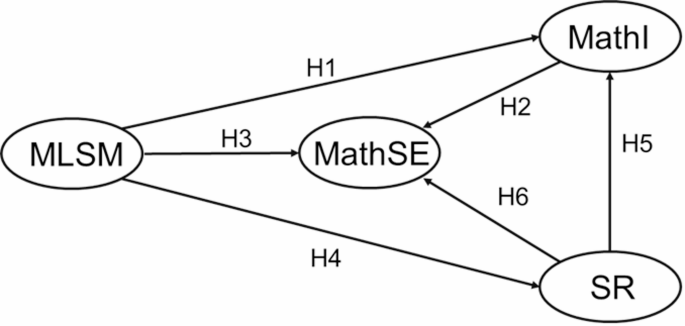
Figure 1 presents our conceptual research model, which provides a comprehensive framework for understanding the potential impacts of mathematics learning with social media (MLSM) on three critical outcomes: mathematics interest (MathI), mathematics self-efficacy (MathSE), and self-regulation in mathematics learning (SR). Grounded in the control-value theory, the model hypothesizes that MLSM may exert both direct and indirect effects on these variables, highlighting its multifaceted role in shaping students’ cognitive, emotional, and behavioral engagement with mathematics.
According to the control-value theory, the learning environment—characterized by the accessibility, interactivity, and collaborative nature of MLSM—can influence students’ control beliefs (e.g., self-efficacy) and value appraisals (e.g., interest in mathematics). MLSM may directly enhance MathI by fostering curiosity, enjoyment, and the perceived relevance of mathematics through engaging content and social interactions. It may also directly strengthen MathSE by providing a supportive environment where students can gain confidence through peer discussions and immediate feedback.
Furthermore, the interactive and resource-rich nature of MLSM could directly affect SR by encouraging students to take charge of their learning through goal-setting, time management, and self-monitoring. Actually, social media is inherently designed to capture attention, often pulling users toward non-academic content such as entertainment, social interactions, or irrelevant materials. Students who cannot self-regulate may spend excessive time on unrelated activities, reducing the time and energy they devote to meaningful mathematics learning. Hence, in a social media-supported mathematics learning environment, students are required to actively engage in self-regulation to effectively navigate and utilize the diverse resources and interactive features provided by social media. This means effective MLSM may foster SR.
The model also emphasizes the intricate and dynamic interrelationships between MathI, MathSE, and SR, suggesting that changes in one variable can mediate the effects of MLSM on the others. For instance, effective MLSM may foster SR, and further leads to increased MathI and enhanced MathSE. This indicates that MLSM may not only directly impact MathI and MathSE, but also indirectly impact them via SR. By exploring these intricate relationships, our research aims to provide a nuanced understanding of how MLSM can serve as a transformative tool in fostering a holistic and effective mathematics learning experience.
link